


Today’s Favorite Quote: There is one quality a person must possess to win, and that is a definiteness of purpose, the knowledge of what one wants, and a burning desire to possess it - Napoleon Hill
Happy Birthday to those who have passed on and to those great wrestlers still with us:
In Memoriam:
(none)
Happy Birthday:
Bob Orton, Jr (76)
Mareva Malania\Chief Tapu (75)
Bill DeMott\Hugh Morrus\Crash The Terminator (60)
Josh Barnett (49)
Katie Lee Burchill\Katarina (46)
Ryan Allan Reeves\Ryback (45)
Dave Crist (44)
Peyton Royce (34)
Marshall Von Erich (34)
RIP Memorial: We stop & remember those who have passed on this day and gave themselves to the business for us, the fans. We salute you and thank you.
Ad Santel 11-10-1966 at the age of 79
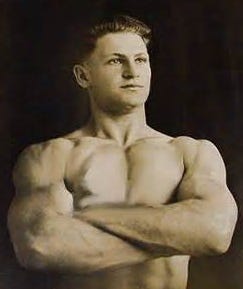
Al Haft 11-10-1976 at the age of 89
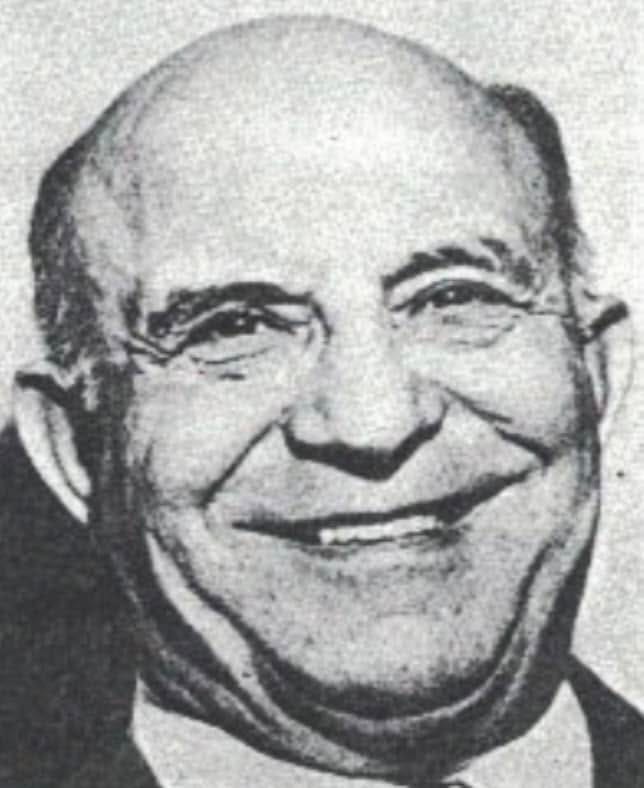
Dick Afflis\Dick The Bruiser 11-10-1991 at the age of 62
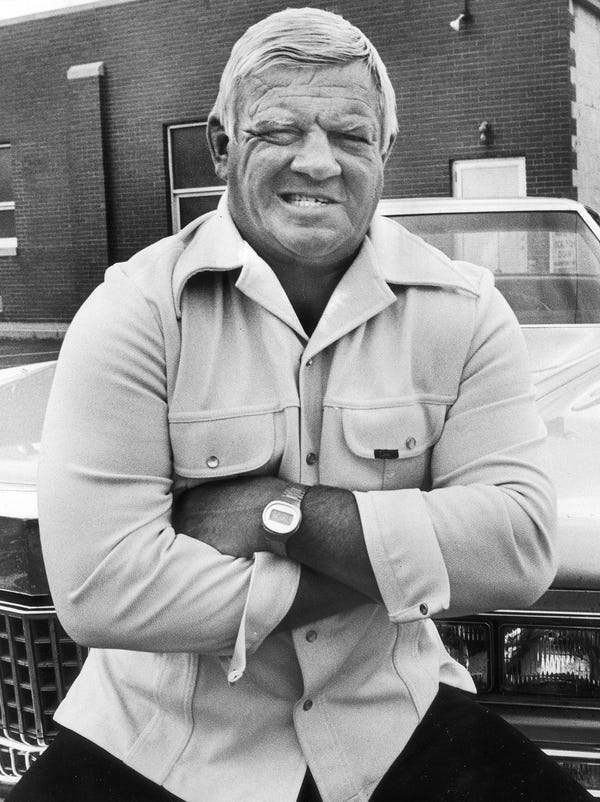
Herbert Gerwig\Killer Karl Kox 11-10-2011 at the age of 80

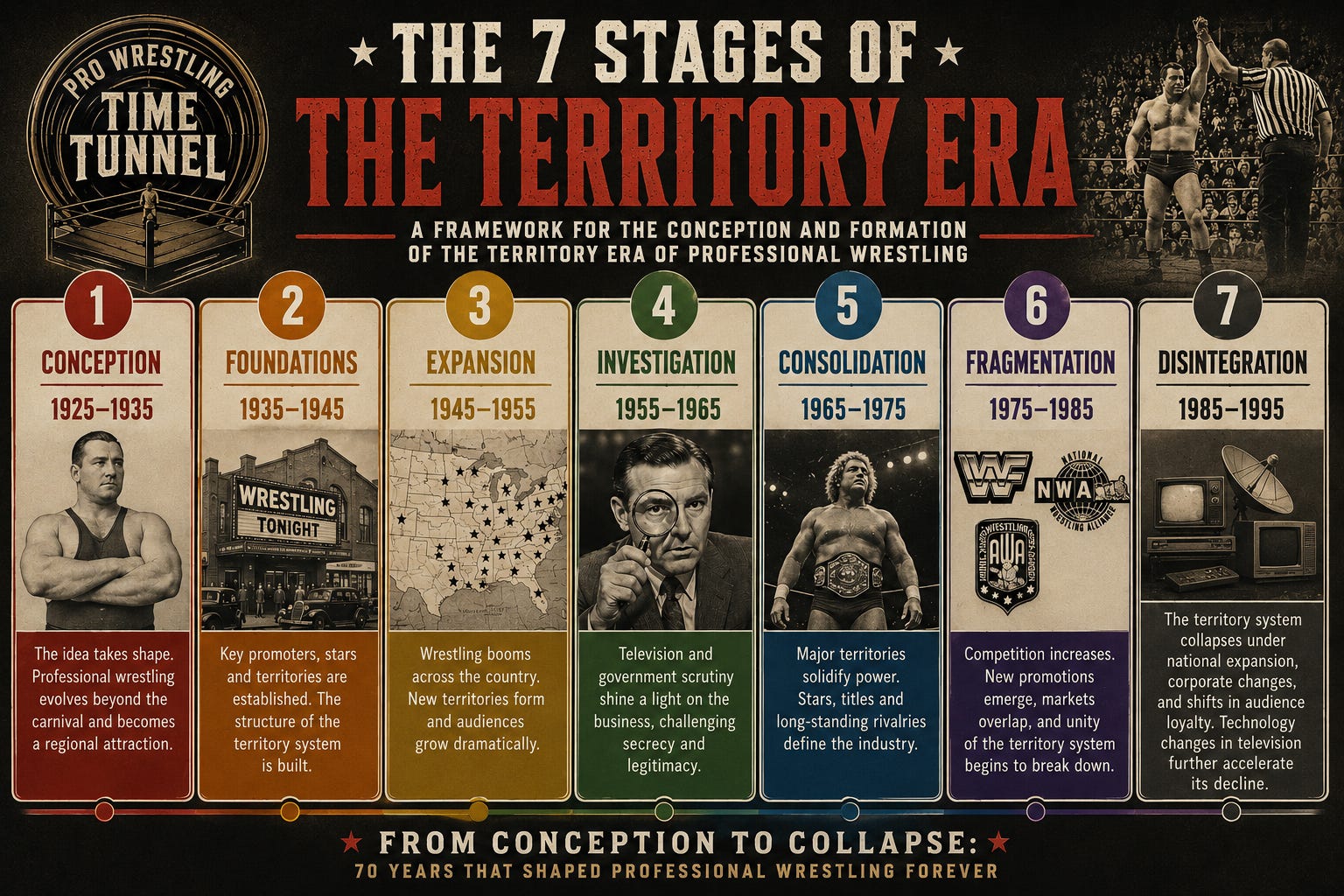
7 Stages of the Territory Era
Stage 4: Investigation
Year Two 1956
Myers v. George: The Private Antitrust War Inside Stage 4
Harold C. “Sonny” Myers v. P.L. “Pinkie” George and the National Wrestling Alliance, Civil Action No. 3-630 (S.D. Iowa), is the case the 1956 consent decree was written not to become. The Department of Justice settled with the Alliance as a trade association and closed the file. Myers tried to collect money from the same facts, in the same district, with a jury in the room. He won a verdict once, lost twice on appeal, and never collected. The opinions that came out of it are the closest a federal court ever came to describing how a territory actually worked.
The parties and the real quarrel
Sonny Myers was not an outsider with a theory. He was a working wrestler who also ran Sonny Myers Amusements, a carnival-and-fair operation that put wrestling on Iowa and Missouri county-fair midways. Gust Karras of St. Joseph was his mentor. George Simpson of Kansas City, Bob Geigel, Pat O’Connor, and Bobby Bruns sat in the same central-states circle. That circle wanted Iowa.
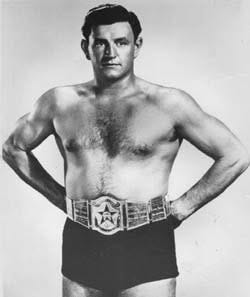
Pictured: Sonny Myers
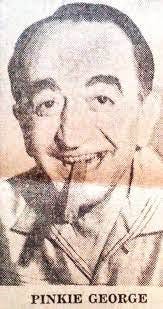
Paul “Pinkie” George of Des Moines had founded the Alliance in 1948. Iowa was his claim. He had even put a local “world” title on Myers in Des Moines on November 3, 1947, when Myers beat Orville Brown — three days before the same men worked Kansas City. The later lawsuit was not born of strangers. It was born of a founder and a midcard star who had already used each other.
The flashpoint was the 1954 fair circuit. Alliance custom said a man who wanted wrestlers in Iowa went through George and paid the booking slice. Myers believed Avoca had been dark since 1950 and that he could bring Karras’s men without paying Des Moines. Checks of $75 and $100 were either refused or, in George’s version, never arrived. George booked eight men for Avoca on August 10 and Clarinda on August 11, then appeared at Avoca and confronted Myers in front of the crowd. He wrote the fair board on August 16 that in twenty-six years he had never been “subjected to bodily threats, humiliation and accusations” as he was that night.
George’s later answer in court was that he had never stopped Myers from wrestling, had used him on Iowa cards, and that Myers had worked steadily across the Midwest and South. Myers’s theory was the opposite: George “owned” Iowa; the Alliance made that ownership continental; a wrestler who crossed a member became unbookable because he had to travel to live.
That is the private version of the same territorial sentence the Antitrust Division had already written into a draft complaint.
The pleading
The complaint was filed August 2, 1955, in the Southern District of Iowa — the same court that would take the government’s case fourteen months later.
Myers sued under Sherman Act §§ 1 and 2 and sought Clayton Act § 4 treble damages. The theory had two prongs, and the Eighth Circuit would later treat those prongs as the whole case:
First, he had been blocked as a promoter in Iowa because George and the Alliance monopolized professional wrestling and the exclusive use of every wrestler “of any prominence” inside the continental United States.
Second, he had been damaged as a wrestler because George caused other Alliance members not to use him.
The complaint’s most useful paragraph, preserved in later commentary on the file, is the labor description of a territory. A wrestler cannot stay in one office. He loses box-office value. He must work a circuit that crosses several members. Therefore he is “hopelessly dependent” on the membership. If he falls out with one booker he has “no place to wrestle and earn a livelihood.” No local promoter can book “individually and directly.” That is not poetry. It is how the road actually paid.
George answered on December 29, 1955. Harry N. Soffer, the Alliance’s St. Louis counsel and the same lawyer who would negotiate the consent decree, was on the defense. The answer denied prevention, denied complaints to other members, and pointed to dates Myers had worked for George and for other Midwestern offices.
Two facts made the private case more dangerous than the government’s.
Myers wanted cash, not bylaws. A jury that believed him could treble the number.
Myers could put bookers on the stand under oath about “owning” Iowa. The Department of Justice had avoided that theater. Myers filed it.
How the consent decree sat in the courtroom
The government complaint and judgment were entered in the same district on October 15, 1956. Pretrial in Myers’s case produced an order that there would be “no mention made at the trial of any consent decree entered against National Wrestlers Alliance.”
That order is the hinge between the two lawsuits.
If the jury heard that the United States had already charged the Alliance with the same monopoly, Myers’s case became a damages appendix to a federal finding. If the jury did not hear it, Myers had to prove a national conspiracy from Iowa fair dates, booking gossip, and the word of men who still needed work. Defense counsel later slipped close to the line anyway — one argument was that if the Alliance were a monopoly “the government would have done something about it,” which used the silence of the excluded decree as proof of innocence.
The decree also created a timing problem. Myers sued in 1955. The practices he described were the pre-decree Alliance. The trial did not start until December 1958. By then the Alliance had signed new bylaws and Muchnick was telling anyone who asked that the organization had reformed. A 1954 shouting match at Avoca had to carry a 1958 monopoly case.
The first trial: December 1958
The case was tried to a jury of nine men and three women before Judge Hicklin.
George Simpson testified for the plaintiff. He said he had had trouble getting talent under the Alliance system and that he had lately “straightened things out” with Orville Brown and Sam Muchnick. Muchnick himself took the stand for Myers and did little damage to George or the Alliance. That appearance is the political core of the trial. The president of the defendant association testified for the plaintiff and protected the association. Myers had already told members, privately and publicly, that he had nothing against the Alliance and everything against Pinkie George. Muchnick used that line later in a letter to Acting Assistant Attorney General Robert A. Bicks.
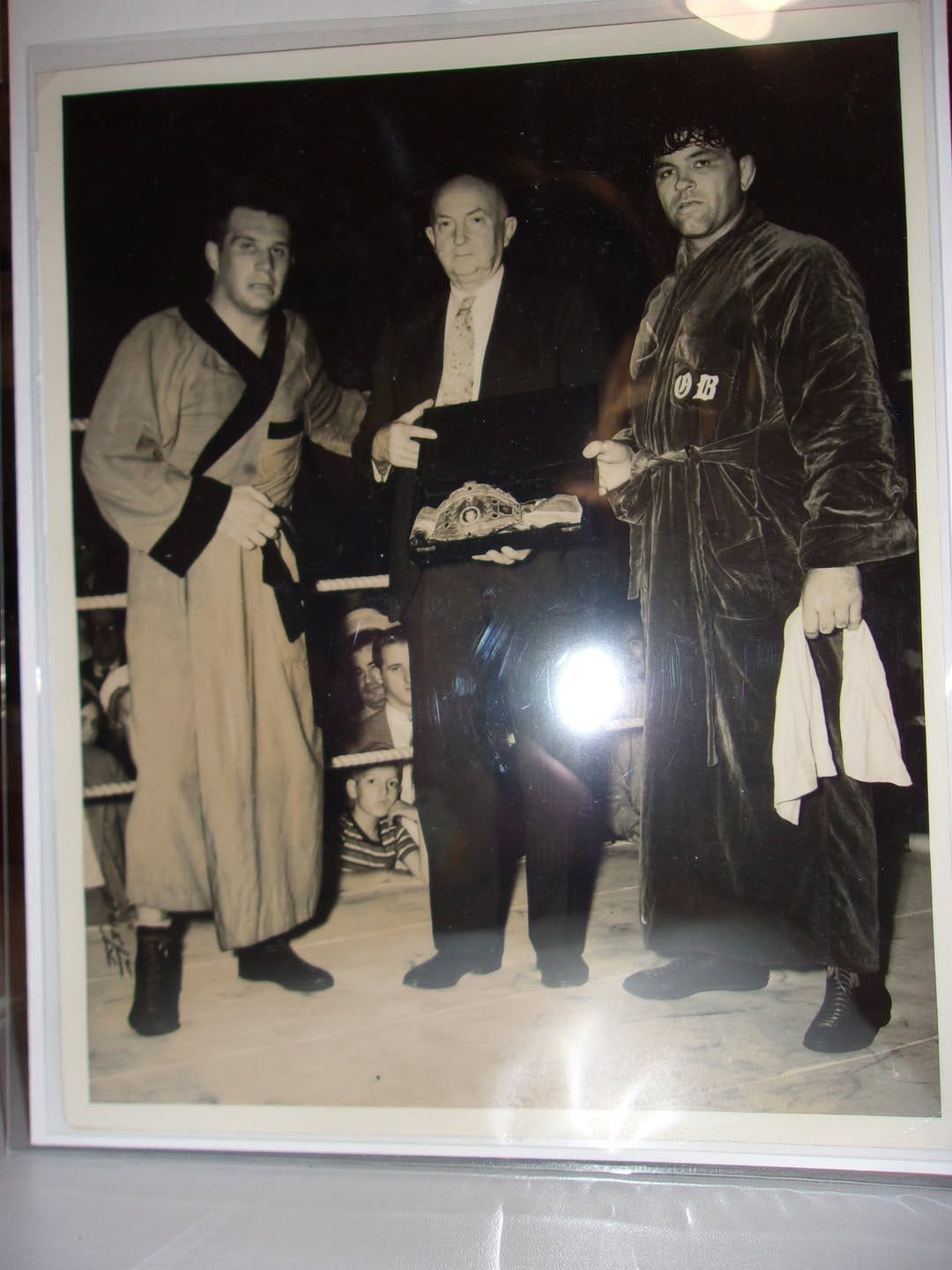
Pictured: Sonny Myers, George Simpson and Orville Brown seen before the January 13th, 1940 match fof the Kansas City version of the Midwest Wrestling Association World Heavyweight Title
George’s public counter-story was a “one-sided wrestling war.” He named a combine of Karras, Myers, and Simpson, said the suit was “camouflage” timed to the federal investigation, claimed a phone threat to “deliver your body to your wife,” and bought a gun. Whether the threat was real is less important than what it reveals: Iowa in 1957–58 was not a legal seminar. It was a fight over who booked Des Moines.
On December 8, 1958, the jury found for George and the Alliance. Myers had asked for figures in the hundreds of thousands — $200,000 in one contemporary report, $600,000 in another. He got nothing.
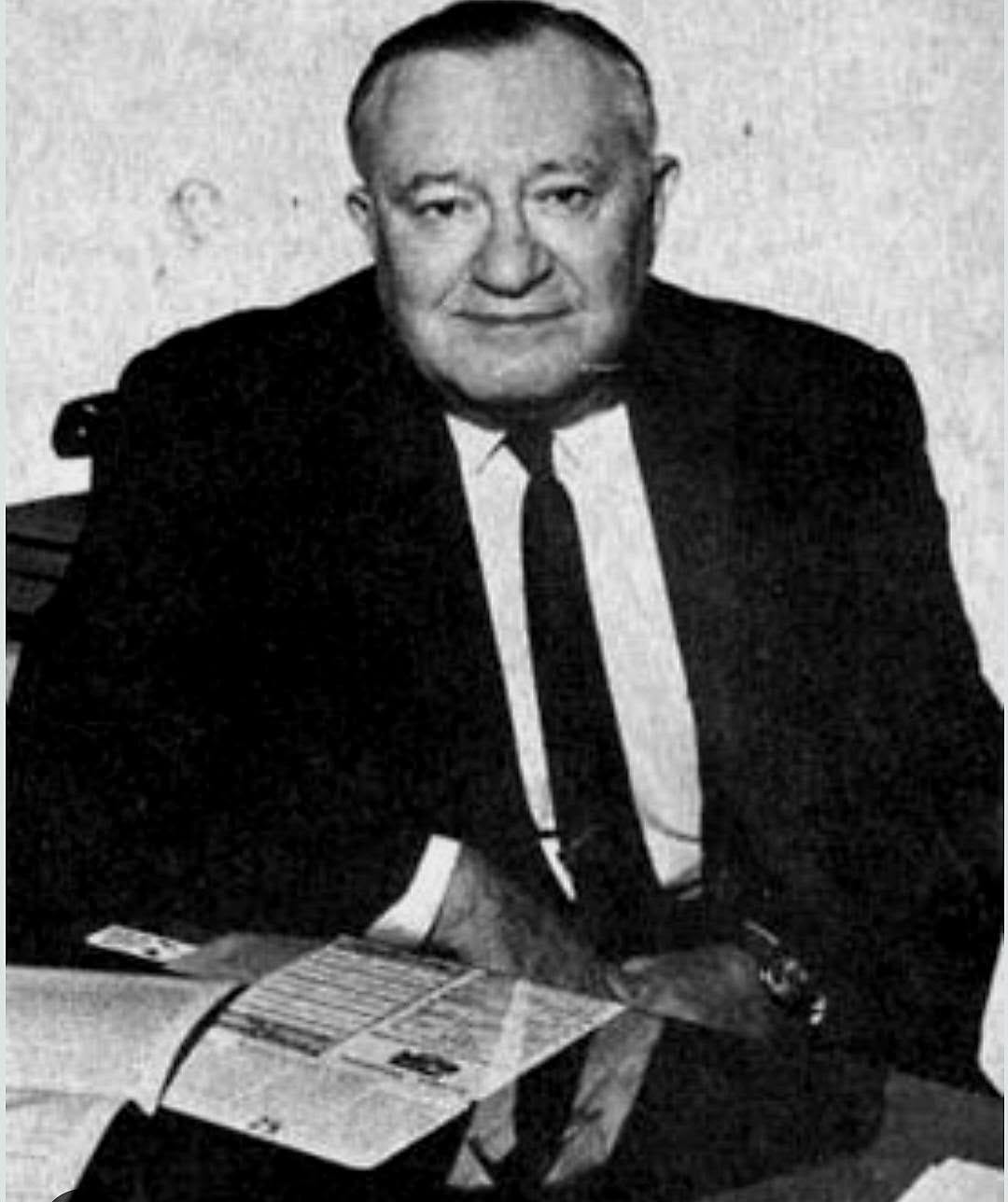
Pictured: Sam Muchnick
The Eighth Circuit reversed on October 27, 1959, in Myers v. George, 271 F.2d 168. Judges Gardner, Vogel, and District Judge Mickelson sitting by designation did not reach monopoly. They reached the judge. Myers’s lawyer, James G. McDowell Jr., catalogued remarks “variously referred to as unsolicited, jocular, belittling, witty, unjudicial, and prejudicial.” The court agreed that the trial judge had “made a mockery of the trial” and that Myers “was prevented from having a fair trial.” New trial ordered.
The first appeal is a judicial-conduct case wearing an antitrust caption. It tells you how fragile a private monopoly suit against a popular amusement was in a Midwestern courtroom in 1958. The facts never got a clean shot.
The second trial: January 1962
Retrainment began January 8, 1962, before Judge Roy L. Stephenson. Closing arguments were January 25. After about four hours the jury found for Myers: $45,000 in lost earnings as a wrestler, $5,000 in lost promoter profits, $50,000 total. Under Clayton § 4 that trebled to $150,000, plus fees.
That verdict is the high-water mark of private antitrust against the Alliance. A Des Moines jury was willing to say a wrestler and a fair promoter had been hurt by the way Iowa was booked.
Soffer noticed for the Alliance on March 26, 1962. George E. O’Malley noticed for George eight days later.
The second appeal: what the Eighth Circuit actually held
National Wrestling Alliance v. Myers and George v. Myers, 325 F.2d 768 (8th Cir. 1963), decided in that winter and issued into early 1964, is the opinion that matters.
Judge Ridge wrote for the court. Chief Judge Johnsen concurred separately. The judgment was reversed and the case sent back “in toto” for another trial. There was no third trial that produced a collectible judgment.
The court split the claim the way Myers had pleaded it.
The Alliance as a corporation. The jury had been allowed to treat the Alliance, qua corporation, as possessing monopoly power — the power to exclude competitors from the field. The record, the court said, would not support that finding. The Alliance was not itself in the business of booking, promoting, or exhibiting matches. Iowa corporate law required the board to act as a unit. A single officer’s boast could not bind the entity. There was no proof the corporation, standing alone, could keep a man out of the business.
That holding is the legal opposite of the 1956 consent decree’s charging decision. The Department of Justice had named the Alliance as the single defendant precisely so the association could be the vessel of the conspiracy. The Eighth Circuit looked at the same vessel and found it empty. Both can be true. A conspiracy among members is not the same thing as monopoly power resident in the corporate charter.
Chief Judge Johnsen saw the tension. In concurrence he said he was “not certain” the Alliance could not be treated as holding monopoly power representatively — a group of bookers joined “for control and protection,” the corporation not intended to have real corporate functions, membership existing to make “their underlying agreement or understanding work.” He still joined the reversal because the damages and the instructions would not hold.
George and the Iowa incidents. Feud testimony — threats, humiliation at Avoca, who paid whom for a fair — was “feudal character,” useful to weigh credibility, not proof of a national monopoly.
Booking after the quarrel. “Both before and after the Iowa incidents … the evidence is that appellee wrestled for some members of the National Wrestling Alliance, including the appellant George.” A blacklist that leaks is a hard thing to take to a treble-damages verdict.
Damages. This is where the verdict died. Johnsen could almost live with $5,000 in lost promoter profits. He could not live with $45,000 in lost wrestling earnings. Myers’s own figures showed that his income had not fallen so much as that he “had to work harder and longer to keep up the amount.” A man who still cashes checks in ten states has not been excluded from the market. He has been inconvenienced inside it. Antitrust damages require injury to competition and a rational basis for the number. Working more dates to stay even is not a monopoly death.
The court also doubted “abstract instructions” in a Sherman Act / Clayton Act case — another way of saying the jury had been given the vocabulary of monopoly without a market definition that could support the award.
What the trials proved and what they did not
Myers proved, if a jury is proof, that a Des Moines audience would believe a wrestler could be squeezed by the man who claimed Iowa.
He did not prove, to an appellate court’s satisfaction, that the Alliance as a legal person was the squeezer, that the squeeze was a nationwide exclusion, or that the dollars followed the squeeze.
George proved he could still get a first jury. He did not prove he still owned Iowa. By 1959–60 he was in San Antonio, working against Frank Brown with Morris Sigel’s help, while Bobby Bruns was booking Des Moines. Muchnick wrote Bicks on February 29, 1960, to wave that fact as evidence the territorial bylaws were weakening — the consent decree working. George wrote Muchnick the opposite: resign from the Alliance and the organization “goes in and takes over.” Both letters are true to their authors. Iowa was no longer Pinkie’s once the lawsuit made “I own this state” a sentence you might have to repeat under oath.
The central-states map is the part of the case that outlived the docket. Karras, Simpson, Geigel, O’Connor, Bruns, and Myers were not reformers. They were a rival booking combination that used an antitrust caption to fight for a territory. Muchnick kept peace with that combination and used George as the man who would not stop talking about ownership. Stage 4 Investigation includes this move: when the government forbids exclusive territories on paper, the fight over towns becomes a fight over who can still say the word.
Relation to the 1956 decree
Place the two cases side by side and the Division’s settlement looks less timid.
The government took a conduct decree, no admission, no damages, no wrestler on the stand about the work, file closed January 1957.
Myers took the same facts to a jury, was barred from mentioning the decree, lost, won a reversal on the judge’s mouth, won a verdict, and lost the verdict because the Alliance was the wrong defendant and the numbers were the wrong numbers.
A private plaintiff has to prove standing, antitrust injury, a relevant market, power in that market, and damages with a rational basis. The United States, settling a trade association, has to get signatures and a judgment it can inspect. Myers supplied the Division with corroboration in 1955. He could not convert that corroboration into a check in 1963.
The pretrial ban on the consent decree is the cruelest piece of procedure in the file. The one public document that would have made Myers’s monopoly story easy to tell was the one document the jury was not allowed to hear. Defense counsel then argued from the government’s supposed inaction. That is how a consent decree without an admission becomes a shield in the next courtroom.
Aftermath
George resigned in bitterness, accusing “a very small minority of the Alliance, including President Muchnick” of violating the decree through “interlocking regional monopolies that control the champion.” He kept promoting boxing and later managed welterweight Curtis Cokes. His Des Moines office was finished.
Myers kept wrestling. His 1951 tax papers, introduced in the case, already showed the road the complaint described: Iowa, Texas, Missouri, Minnesota, Kansas, Nebraska, Tennessee, Oklahoma, Arkansas, Kentucky; car when he could, plane when he had to; licenses in dozens of states. He worked Omaha in November 1958 while the first jury was out. He left for Japan in 1960. The man who said he had been barred continued to appear on Alliance-adjacent cards. That fact sank the damages. It does not erase the 1954 fair-board speech that Iowa had a single point of contact.
No third trial produced a reported money judgment. The law of the case after 325 F.2d 768 was that this record would not support treating the Alliance corporation as a monopolist and would not support a $45,000 earning loss. Myers’s lawyers would have needed a different defendant list — the members as co-conspirators, which is what the government’s original Los Angeles draft had named — and a damages model that did not collapse when the plaintiff still had dates.
What the case is worth to Stage 4
Myers v. George is the Investigation era in a county-fair parking lot.
It shows why the Alliance was vulnerable: a founder said out loud that the membership had given him a state. It shows why the Alliance survived: the corporate shell had no power the court would recognize, the plaintiff still worked, and the president of the defendant testified without destroying the defendant.
It shows the difference between a booking custom and a Sherman Act market. “You go through me in Iowa” is how every territory ran. Turning that sentence into treble damages required proof that the sentence was an agreement among competitors that excluded a man from a defined market and cost him a number a jury could defend. The second jury supplied the number. The Eighth Circuit took it apart.
It also shows the human cost the consent decree never priced. Myers carried legal bills against a claim he once styled in six figures and finished with nothing. George lost the town he had founded the Alliance to protect. The combination that wanted Iowa — Karras, Simpson, Geigel, the St. Joe–Kansas City line — outlasted both of them in the central states.
The government case of 1956 changed the bylaws. The Myers case of 1955–1964 showed what those bylaws had meant when a wrestler tried to book a fair without paying the man who said he owned the state. That is the trial. The doctrine is in 271 F.2d 168 and 325 F.2d 768. The business is in Avoca on August 10, 1954.
Thank You for Watching and Listening
I’m Tony Richards, Pro Wrestling Historian, Author and Storyteller. I share pro wrestling historical items in each issue of the Time Tunnel Pro Wrestling History Newsletter and each episode of our podcast show. Thanks for your support! If you enjoy my information on select events, matches and insights, please share with folks you think might like to be a subscriber!
Remember, Premium subscribers get access to exclusive and special content such as some special issues including a multi-part deep dives on wrestling territories, wrestler bios and championship title histories, special audio and video interviews on territory pro wrestling and more available in the Pro Wrestling Time Tunnel for Premium Subscribers. Being a Premium Subscriber also means you support me in my efforts to document Pro Wrestling History through my research, writing, books, vidoes and podcasts. And…I have something very special planned for our Premium Subscribers on the Podcast side of things in 2026! Details soon here in the Pro Wrestling Time Tunnel.